The cultural heritage of India has been studied by historians, archaeologists and anthropologists over a long period of time. Along with this ethnic diversity, Central India was a melting pot of various political and religious activities since the middle ages. Besides this living heritage, the land is scattered with a number of historical and archaeological sites, which makes it a buzzing hub for archaeophiles. Acheulian culture is mostly represented in India in the form of the availability of stone tools. The term ‘Acheulian’ is used to denote the Lower Paleolithic period in India. During this period,the humans as hunter gatherers roamed the forests as a different hominin group, as Homo erectus, before evolving into Homo sapiens, the predecessor of modern human beings.
At the world heritage site of Bhimbetka caves where evidences signify a continuous existence of humans since the Lower Paleolithic period. This makes me more curious about the Acheulian sites of these places. The iconic site of Bhimbetka is one of the most important places of evidence of early hominin existence in India. It is situated in Raise district of Madhya Pradesh and the Mumbai Delhi central railway line passes near it. The word ‘Bhimbetka’ is a corrupt form of the Hindi word Bhimbaithka which means the sitting place of Bhima,the epic hero of the Mahabharata.
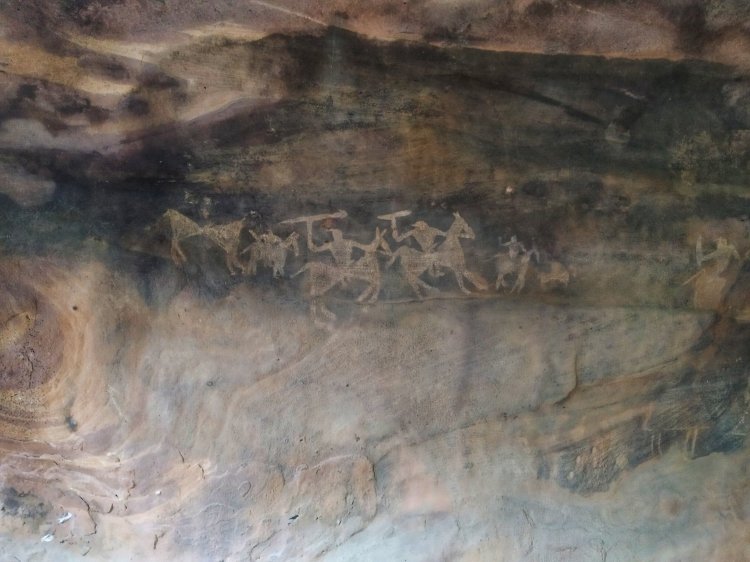
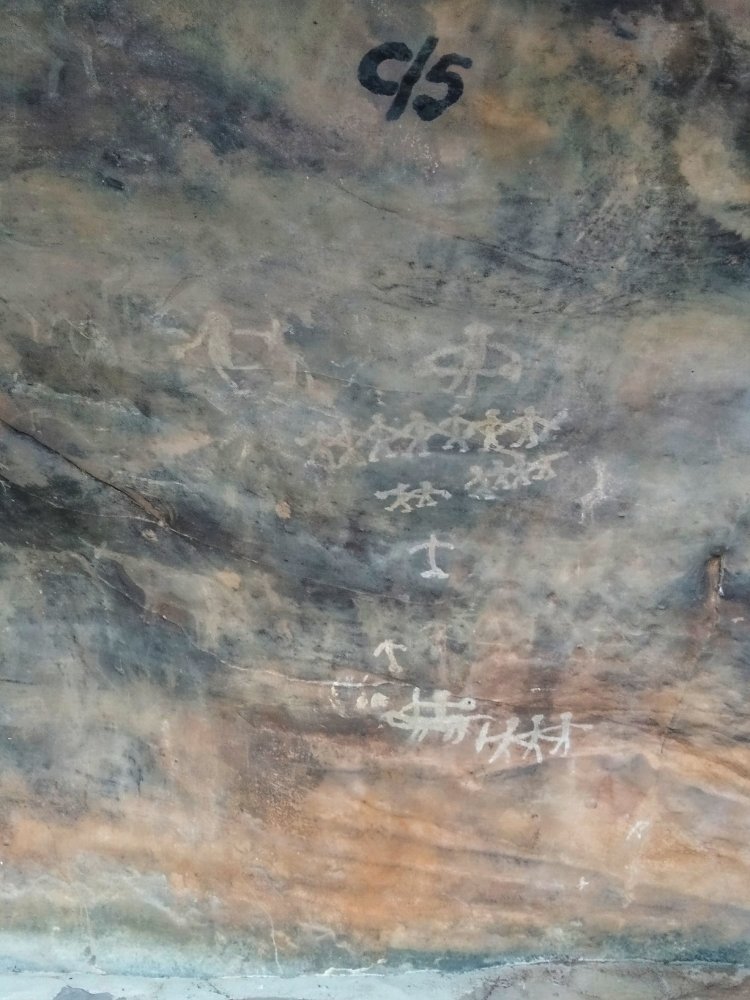
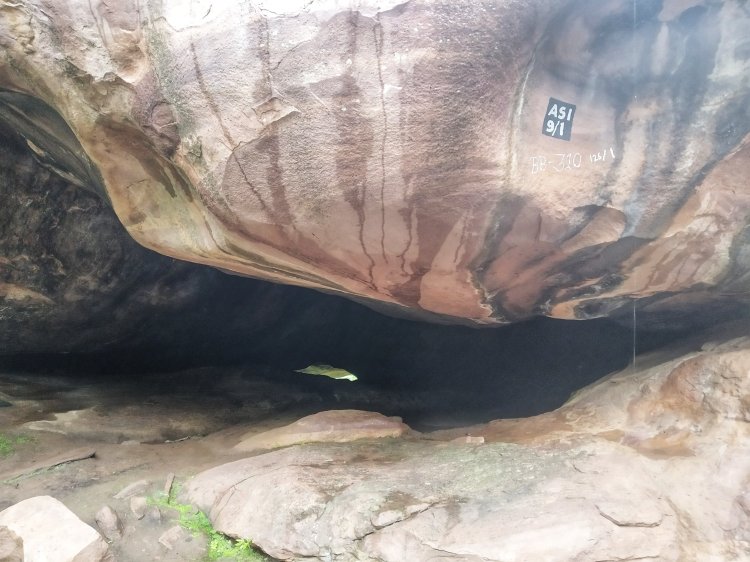
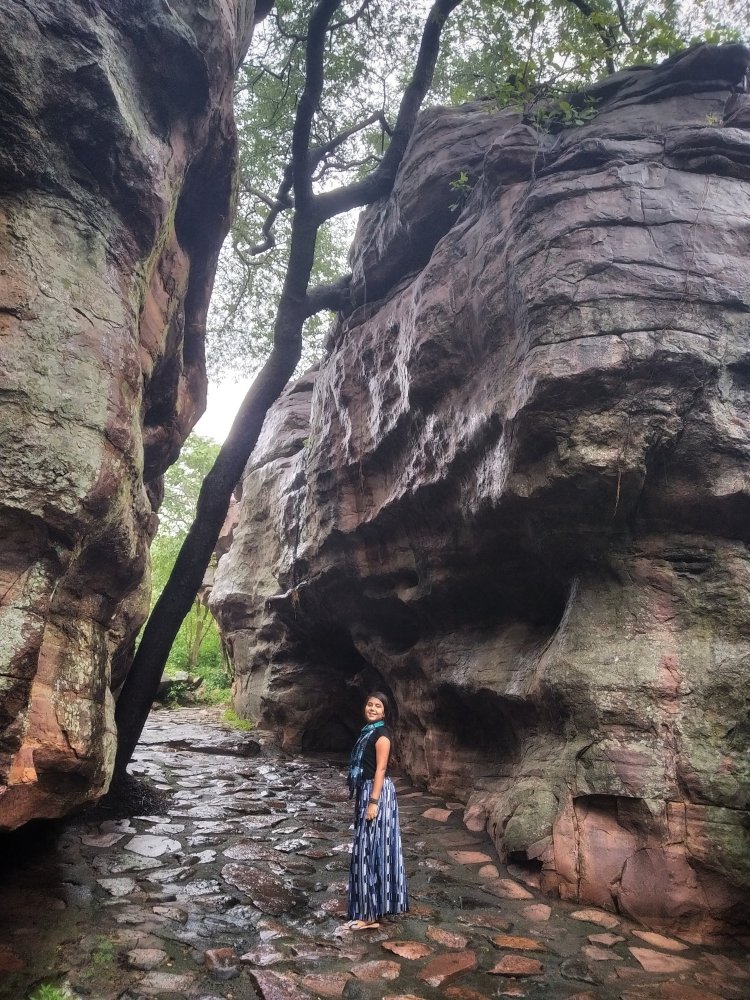
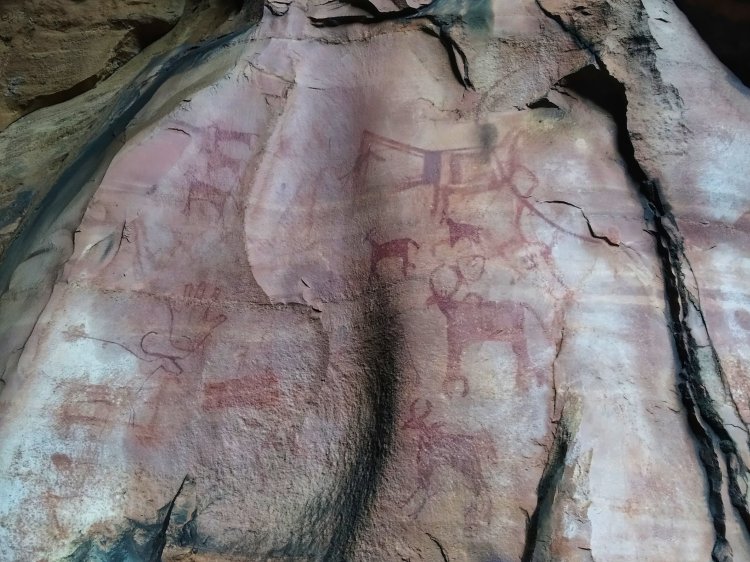
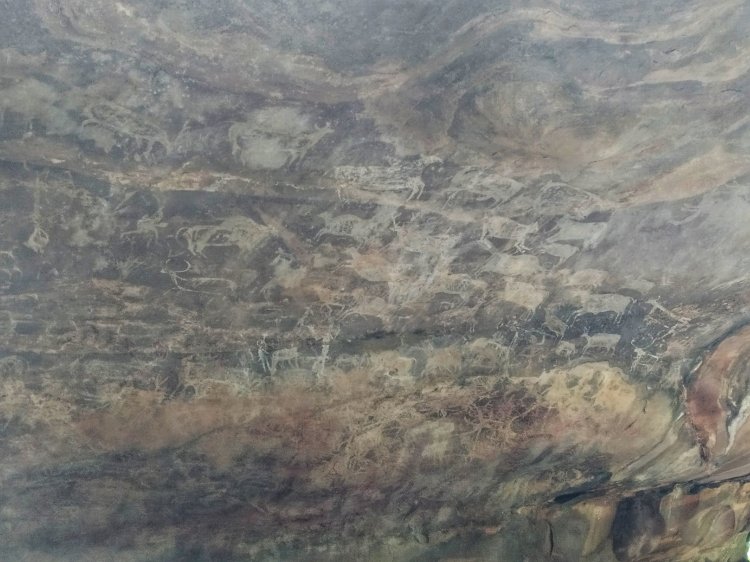
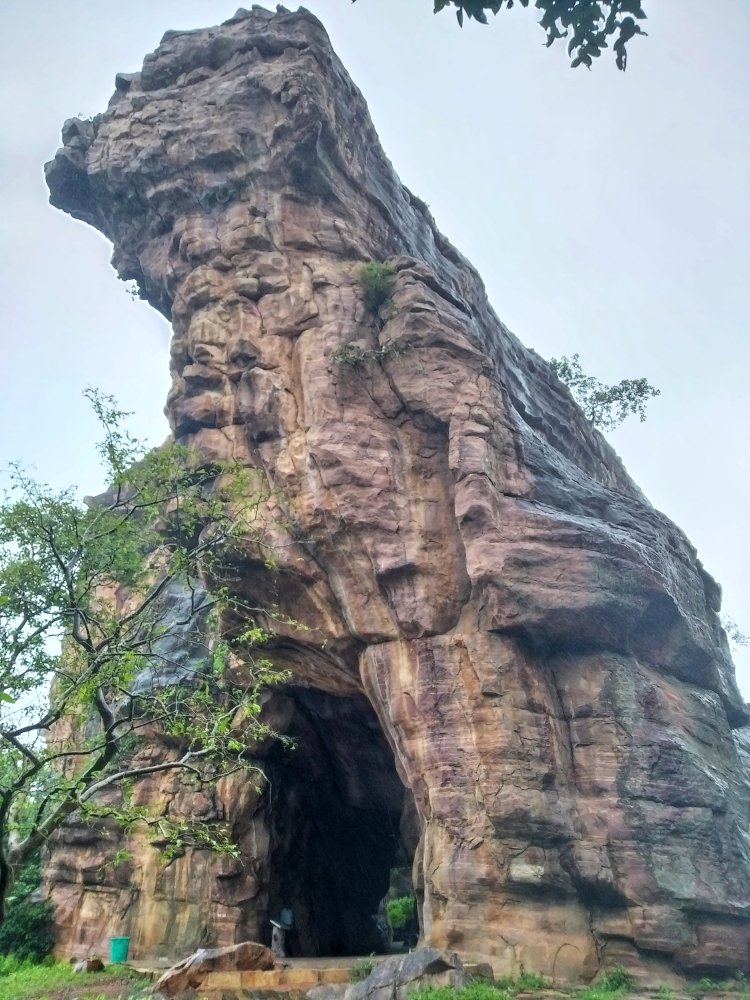
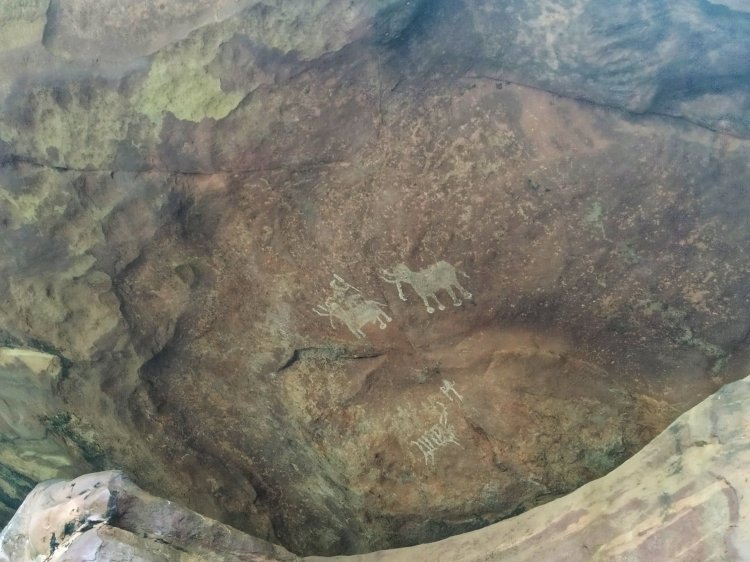
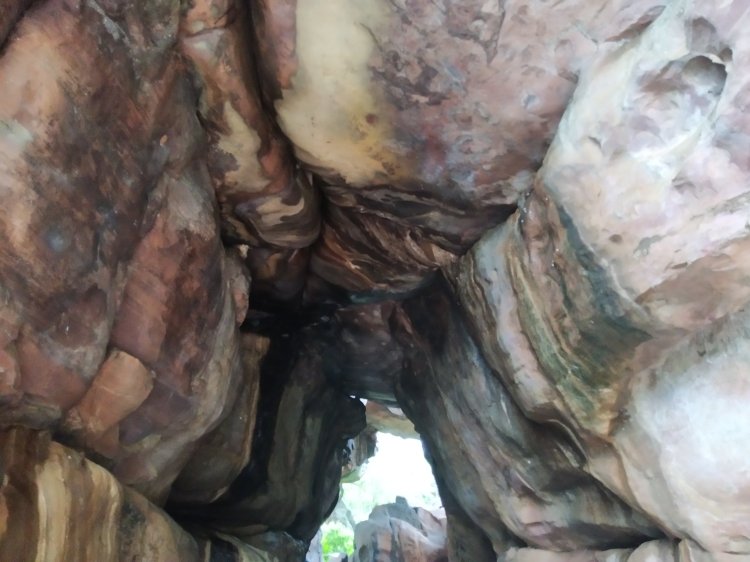
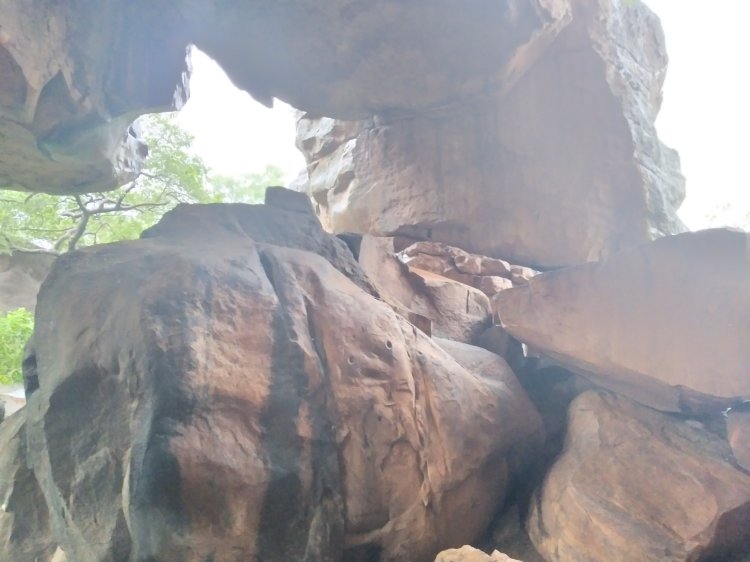
The site of Bhimbetka was discovered by V.S. Wakankar in 1957. In the following years, he continued to explore the region and located over 600 rock shelters. The guide there explained us that the rock shelters are 1,00,000-1,50,000 years old and thy were under the water and they came out of water after the Gondwana plates uplifting. Different paintings on rock shelters are found depicting hunting and social gatherings of humans of those times. The white colour paintings are 10,000 years old, red colour paintings are 7,000 years old and green and yellow colour paintings are of Gupta period. During the excavation, skeleton of a man of 7 feet was also found which is said to be of 6,000 years old. The rock shelters of Bhimbetka are carved as different amazing shapes which are naturally carved due to water currents. The colours of the paintings were obtained from natural minerals. The main material used was haematite or geru which was easily available in local areas.
Bhimbetka rock shelters are not just the world heritage site, its an actual confrontation with who were our ancestors and at that place you really get to witness the actual history of the humans. Go there and have an experience of a lifetime.
 A Rendezvous with life
You wrote it in a very good way
LikeLiked by 1 person
Thnx 😊
LikeLike